
Category Archive : Business Development

A woman overwhelmed with papers on her desk

Business Anxiety: How to Start a Business Without the Stress

Starting a business is daunting, especially for those who have never done it. Creating something and watching it succeed entice many entrepreneurs but can easily become overwhelming. Specifically, if one doesn’t take the time to develop their idea, discover their target audience, and work on overcoming their business anxiety.

Keep reading to learn tips on starting a new business.

Allot Time to Develop the Idea

The first thing to do is breathe and allow oneself to take the time necessary to research and develop the idea. Identify if this is a side project or if it will become full-time work. Research similar ideas and observe how the competition sells their product and/or service and to what demographic. With this information, one can begin to understand the target market for this product/service.

Discover the Target Audience

Overcoming business anxiety requires knowing the target market of their product and/or service. Does this aim toward children, parents, seniors, college students, or a different demographic? Research and see who responds to similar ideas and consider how to attract those types of clients. Taking the time to research the idea and target audience thoroughly can assist with overcoming business anxiety.

dartboard focused on a red dart on the outer rim on the number 2.

Overcoming Business Anxiety

The main way to overcome business anxiety is to allow oneself time. As mentioned previously, it’s important to research and set everything up. Does the business need a website or a storefront? Is it something one can run by themselves, to begin with, or will it require employees? Deep dive into these questions and set the limitations beforehand. Don’t overwhelm the business with several different products or services. Start small and develop as the business grows.

The idea is the first step of any business. It’s the development and time commitment that brings that idea to life. Starting a new business can be stressful, but spending the time researching and familiarizing oneself with what this requires and the target audience can relieve some of the stress. Take the time to understand all aspects of the product or service, and don’t rush if it can be avoided.

Interested in business and other relative topics? Check out our site!

A Social Media Textbox with an outline of a heart and a number zero with in it.

Social Media Presence: Unique Downsides

A Social Media presence can affect any user on the platform. Social Media impacts marketing campaigns, current and potential careers, self-esteem, and more. As much as social media helps, it also has downsides.

Keep reading for insights on the toll social media can have.

Photo Manipulation in Youth

Wanting to have a more “Instagrammable face” has increased plastic surgery rates, particularly in a younger age range. Many teenagers struggle with low self-esteem because they find validation through how many “likes” their Instagram gets. Once again, a  social media presence can significantly impact and have downsides.

An ample reason behind this transition to a more “Instagrammable face” is the increase in utilizing photo editing apps and photo manipulation tactics. Businesses have been using manipulation strategies since the earliest printed newspaper and magazine, but social media has made them more accessible and more prevalent. 

The accessibility of the Internet has led to a rise in youth eating disorders and other mental illnesses. Using models of all different body types is a great way to avoid negative connotations with a business’s brand and helps fight expectations formed by the media.

Social Media Presence: Industry

There are also specific downsides to a social media presence when working in any kind of industry. The business’s brand and activities are exposed to public scrutiny. Negative comments or complaints can quickly spread and harm the business’s reputation. One suggestion is to respond to such feedback effectively while maintaining a positive image because inappropriate posts can have long-lasting consequences.

Businesses with a social media presence often share information about products, services, and internal operations. This makes the business susceptible to security risks, data breaches, and hacking. Don’t post or share confidential details. The implications for the company are pragmatic and can hinder competitiveness, intellectual property, and customer trust.

Cancellations

A social media presence can affect someone’s career or future opportunities, especially when one does not clean out older social media posts, photos, or other past behavior that could be considered unseemly.

Many celebrities have been “canceled” due to insensitive behavior and harmful posts. Past actions on social media happen to celebrities, influencers, and regular everyday people.

Uploading can be just as detrimental to one’s mental health as cancellation, and it can often cause burnout. Maintaining a social media presence and persona requires consistently creating and uploading content. These heavy requirements, such as replying to over twenty posts and creating new original content, also increase the likelihood of posting something offensive.

Another important thing businesses need to consider is the person representing them in public. A problematic spokesperson can cause issues for the company directly. Who represents the business brand is imperative.

Conclusion

Having a social media presence creates an opinion. It can be detrimental to mental health but alternatively can create jobs and careers. Have a well-thought-out social media strategy considering potential downsides, whether for personal use or business.

For more things business, check out Ferrygodmother.biz.

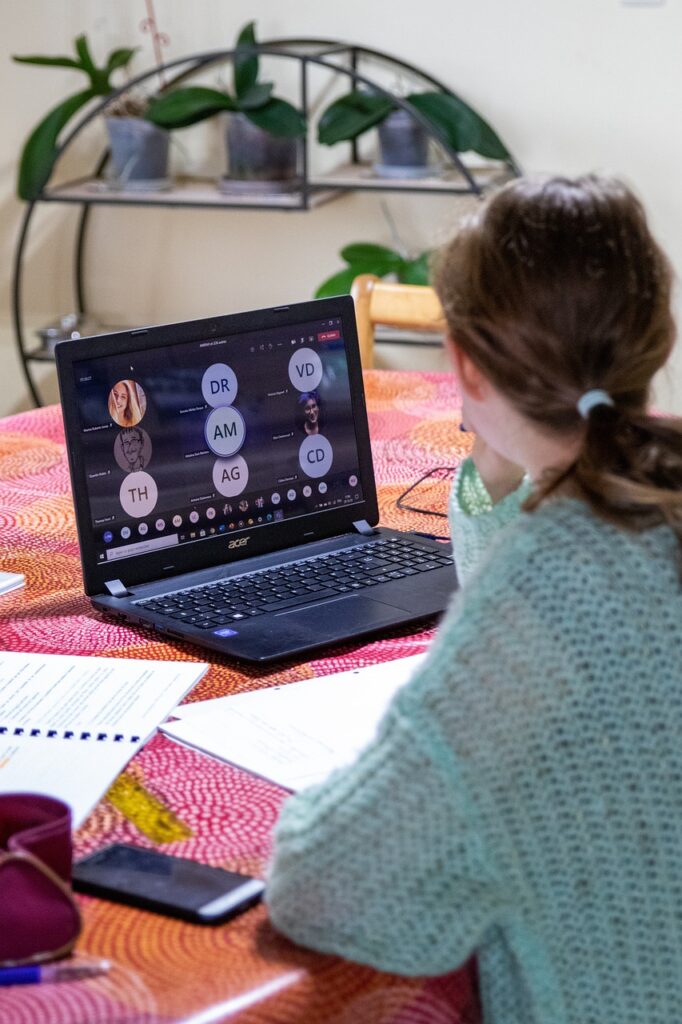
Someone with a face mask on and doing work from their computer.

Tremendous Businesses Struggle With Covid-19

The COVID-19 pandemic had a significant and extensive impact on businesses worldwide. The results were felt throughout industries and sectors, and the pandemic’s problems and changes forced businesses to adapt immediately to continue operating. A game-changing event that compelled businesses to adapt and innovate in new ways. It emphasized the significance of flexibility, resilience, and the capacity to overcome unexpected situations.

Continue reading to see the struggles these businesses had to endure during COVID-19.

Business Financial Strain with Covid-19

Many firms had major financial difficulties due to decreased consumer spending, supply chain interruptions, and temporary closures. During lockdowns, small companies, in particular, faced an uphill struggle to stay open. The United States Census states, ” In 2020, 6.0 percent of companies canceled, 9.7 percent postponed, 8.2 percent decreased, and 1.5 increased some of their budgeted capital expenditures“. The drop in economic activity and financial strain caused by the COVID-19 epidemic revealed the global economy’s dependence.

Working Remotely

During lockdowns and social distancing, businesses had to implement remote work to prioritize employee safety. This necessitated providing employees with the appropriate technology, resources, and infrastructure to work from home efficiently. An article by Gartner, a technological research and consulting firm, states, “being forced into the world’s largest work-from-home experiment and, so far, it hasn’t been easy for a lot of organizations to implement.” Working from home wasn’t an easy transition for businesses.

The COVID-19 epidemic worked as an opportunity for remote work and digital transformation, forcing businesses to adapt to new methods of operation swiftly.

Someone on a work call on their laptop.

Interruptions in The Supply Chain

The epidemic highlighted flaws in global supply networks, resulting in product delays and shortages. Businesses were forced to seek alternate suppliers and revise their plans effectively. Many nations enforced lockdowns and limitations as the virus spread, resulting in the shutdown of manufacturing facilities and production factories. Businesses and regulators realized the need for more flexible and adaptive supply networks due to the COVID-19 supply chain interruptions.

The COVID-19 epidemic has had an obvious effect on enterprises worldwide. The tremendous difficulties posed by the health crisis drove businesses to navigate unfamiliar ground and adapt quickly to survive. The pandemic highlighted weaknesses and challenged the adaptability of organizations across industries, from remote work and digital transformation to supply chain interruptions and financial hardship.

 To learn more about businesses, visit our site.

words on a page saying success, trainning, and coaching

Virtual Reality Training: Based Learning and Skill Development for Businesses

Virtual reality is leaving no stone unturned as its technology evolves daily. One of the revolutionary vices VR brings to the table is business training. Virtual reality training for businesses is a system of great ingenuity. They cater to business needs such as compliance, developing soft skills, and practicing complex procedures.

Continue reading to learn more about how virtual reality benefits business training.

Virtual Reality Training

To begin, one must know that virtual reality (VR) is a simulated experience. One would use a headset and/or hand controllers to immerse in a computer-generated world. Training consists of what the business wants its employees to do. For instance, businesses use the technology for new employee development. Employees would become accustomed to company culture, processes, and expectations interactively and engagingly. In some cases, VR training reduces the training time, leading to faster skill acquisition than traditional methods.

The programs provided by businesses are also adaptable to individual levels.

Adaptable Development

Virtual reality systems can update during an individual’s learning process, offering challenges that match their skill level.  Many VR platforms have built-in analytics to track user progress. For example, manufacturers such as Ford have implemented training on assembling parts for factory workers before going out on the warehouse floor. The data helps businesses recognize strengths and areas of improvement for employees. 

Besides employee benefits, businesses also use the data to measure the effectiveness of their training program. Something noteworthy when it comes to soft development skills.

hands holding a tablet representing virtual reality training

Soft Development Skills

Virtual reality training simulations stimulate real-life work scenarios without the real-life consequences. Employees can practice leadership, teamwork, communication, and empathy. Walmart has been one pioneer in incorporating soft development skills with its employees. Customers are not always delightful when shopping, so employees should practice satisfactory customer service. It prepares them for a real-life event such as “Black Friday.”

Ending Session

In conclusion, virtual reality has revolutionized the way businesses train their employees. By offering an immersive and engaging experience, VR training helps employees learn faster, retain information better, and develop new skills. The adaptability of the VR systems to individual levels and the built-in analytics provide businesses with valuable insights into the effectiveness of their training programs. With the ability to practice soft skills in simulated real-life scenarios, VR training is becoming an increasingly popular tool for businesses to improve their operations and achieve their goals.

For more on Business, visit Ferrygodmother.Biz.

Deciding Which Internship is Right for You

People are sitting at a table with notebooks and a laptop on it. They appear to be having a meeting,

Introduction

Internships can be a great way to boost your resume and gain work experience. They are especially crucial for students and new graduates. Often, internships can lead to job opportunities if an individual can prove themself as a valued worker. But how can one determine what kind of internship they should take on? What kinds of opportunities should one look for? Keep reading to find out more.  

Types of Internships

There are many different types of internships, such as paid and unpaid, research, writing, remote, on-site, and more. Choosing which one to apply for can be overwhelming, and pursuing a paid or unpaid internship can be tricky. The Forage, a company that provides students with internship opportunities, reports that around 40% of interns are unpaid. Although, it mostly boils down to what kind of work experience an individual is looking to gain. 

Internships have many benefits, including networking and working under more experienced people in one’s field. Securing one that will help one create meaningful connections with people with similar interests. 

Many companies that offer internships acknowledge that the kinds of people applying usually have little to no professional experience. Therefore, applying to most internships isn’t too difficult if one has the proper qualifications. 

Some internships have stricter requirements than others. For example, some may require a college degree, and others might not even require a high school diploma. According to StandOut CV, a company that provides cover letter advice, a reported 21.5% of college students were interns in 2022. It can be helpful to ensure one chooses one they are most qualified for, however, these are more selective, and the application process can be tedious. 

But, given the chance, proving one’s skills and showcasing a good work ethic can be impactful for future employers. A study from Techjury, a company that reviews software and devices, states that students who participate in internships receive 16% more job offers. Internships provide opportunities for students to gain work experience whilst balancing out school.

Qualifications

Some internships have stricter requirements than others. For example, some may require a college degree, and others might not even need a high school diploma. According to StandOut CV, a company that provides cover letter advice, 21.5% of college students were interns in 2022. It can be helpful to ensure one chooses the one they are most qualified for. However, these are more selective, and the application process can be tedious. 

But, given the chance, proving one’s skills and showcasing a good work ethic can be impactful for future employers. A study from Techjury, a company that reviews software and devices, states that students who participate in internships receive 16% more job offers. Internships provide opportunities for students to gain work experience while balancing out school. 

Work Environment

A man sits at a desk. He is typing something on a laptop and simultaneously writing in a notebook.

For most people, the work environment can decide which internship is right for them—what kind of place do they want to work? The best place to work is somewhere that will allow one to learn and grow as an employee. Finding somewhere to intern with plenty of opportunities to expand on and hone your skills is ideal.

One’s field of study or interest best indicates where one should work. If they are interested in education, they should look for opportunities at schools or working under educators. If they are interested in science, one should explore opportunities in labs and research facilities. It varies from person to person, but there’s something for everyone.

Conclusion

Internships are great opportunities to explore the professional field one might want to pursue. Considering what kind of career one wants is a significant first step to determining what opportunities one should search for. There are a variety of internships to choose from, and it’s key to choose one that fulfills one’s needs precisely. 

To find out more about business and internships, visit https://ferrygodmother.biz/.

Beneficial AI To Consider For Business

Technology is constantly advancing with new developments, strengthening its ties to business. Artificial Intelligence, or AI, is one of the latest trends that has proven to elevate some business practices. These new advancements can potentially benefit companies looking to grow exponentially.

Continue readi​​ng to learn of three useful AI tools for businesses.

1. Lovo AI

Voiceovers are necessary for documentaries, commercials, and translations, but they can be time-consuming. The scheduling or hiring process can cause time issues, but Lovo AI, a text-to-speech generator, makes voiceovers easier to manage. In addition, Lovo AI allows text to be converted into natural-sounding audio in various languages and voices according to the website, Elegant Themes.

Since there are dozens of supported languages, companies can look to new markets in other countries and cultures. Although the generated voice can only be as the scripts or text given, it’s best to be mindful of grammar editing tools like Grammarly.

2. Grammarly

Grammar can be an irritating task to consider when producing written content for one’s website. Misspelled words and improper punctuation can set an unprofessional tone and message to new visitors. The artificial intelligence software Grammarly offers suggestions to fix and improve grammatical mistakes or sentence structures in several applications. Besides writing-based applications, such as Microsoft Word or Google Docs, Grammarly can be used in email services like Microsoft Outlook. There is a free and a premium version both with their own set of perks.

3. Solvvy

Customer support is essential to any business, but as companies expand, it can be difficult to manage alone. Solvvy utilizes AI to add a chatbot to one’s company’s web page to answer common questions quickly.

Therefore, this tool is a great way to decrease the number of calls coming in and offer immediate responses to customers. Incorporating this software into one’s growing brand enables individuals to focus on handling larger issues.

Conclusion

Ultimately, AI is constantly growing and being applied to different aspects of businesses. While these examples could support company growth, they aren’t the only tools. So business owners may be interested in exploring what AI can do for their business and new ventures. For more about the business world, visit the rest of FerryGodmother.Biz.

Black background with white letters spelling support small business

A Guide on Choosing Sponsorships for a Small Business

Sponsorships for a small business can complement a brand or organization and build up a local entrepreneur’s career goals. When a local business is supported, it contributes to economic growth—essentially creating a community that relies upon one another’s businesses. This helpful guide will highlight what to consider when choosing a sponsorship for a small business.

Read below the eight key tactics for sponsorship research.

How to Choose Sponsorships for a Small Business

Taking the first step in something new always contains a little nervous energy, but knowing the small business’s goal can alleviate the stress of the first step. The most successful partnerships are when target sponsors meet the small business’s needs, and the small business meets theirs.

Step one is to look for companies catering to similar companies. Do their goals align with the small business’s values and audience? Create a list of sponsors, then research the sponsor’s needs, demographics, business model, and goals. The list will help develop the pitch to the sponsor.

Step two, what makes the small business unique? Define key pitch factors and weave a story to appeal to the sponsors. Step three, sponsors need incentives. Communicate what the sponsor will get out of the deal and how the company will become more visible. 
Step four, stay local with potential sponsorships. It should make acquiring a sponsor easier, but the downside is they may have small pockets. Therefore, consider more than one sponsor depending on how much the small business needs.

Audacious Till the End

Step five, define the small business audience. What makes the customers buy from the small business? Do the customers attend events? What inspires their purchases? To gather data on this, send out an audience survey. Knowing these characteristics helps with seeking out the best sponsorships available. 

Step six, allocate a budget and develop a sponsorship package. Some sponsorships are tax-deductible, but if not, ensure the sponsorship is affordable. A sponsorship package is part of the sponsorship proposal. The packet is a six-page document expressing the small business opportunity.

Step seven, build connections over time. Get to know the potential sponsor with shared values and concerns.

Step eight is to follow up. Not every sponsor will say “yes,” right away. Keep in touch over the year and continue the foundation of a trusting partnership.

Someone is stretching their hand out. representing sponsorship for a small business.

How Sponsorships Benefit Marketing Strategies

Equally important to know how sponsorships benefit the small business. Sponsorships for a small business can boost brand awareness through the interaction of participants at events seeing your logo or brand present. Which also leads to more personal connections with the target audience because the business personally hands out mugs or pens to the customers.

Another benefit is one of the customers takes a photo of the booth at the event and posts it on social media. The small business gains backlinks and social media mentions.

There are more benefits, such as increased sales and standing out from other companies. Still, overall the takeaway is that sponsorships for small businesses benefit the company in more ways than one.

Conclusion

As expressed, sponsorships for a small business can enhance a brand, organization, or local entrepreneur’s career goals. It takes a clear goal in mind and tenacity to pursue another company for sponsorships. Still, after reading this article, there are eight steps to guide a small business toward the correct type of sponsorship.

For more business-related articles, visit Ferrygodmother.Biz.

black background with white words spelling out opportunity.

Sponsorship Opportunities for Small Businesses

Sponsorship opportunities for small businesses can vary depending on the type of business at hand, but a sponsorship should be a win-win scenario. The small business will gain greater exposure and increased opportunities while the sponsor applies a competitive edge to their business beyond price and product.

Read below for more about the types of sponsorship opportunities for small businesses.

What’s a Sponsor?

A sponsorship is when a company gives money or resources to a small nonprofit event or program in return for promotional benefits. Sponsorship opportunities for small businesses can be an image-enhancing tool for how the small business’s brand is perceived. The tool is essential to influence your customer’s opinions and buying behavior. 

This article will only explain four types of sponsorships. They are financial or cash, in-kind, media events, and promotional partners.

Types of Sponsorships

Sponsorship opportunities for small businesses can be any of the listed below.

Financial or cash sponsors sound like what it is. The sponsor gives money to the small business by directly paying for venues, catering services, donations, or WiFi for an event. Ultimately the sponsor company gives money to get recognition for their brand.

In-kind sponsoring means the sponsor donates services and products free of charge. In addition to free printing of posters or banners, sponsors use internal speakers, prize sponsors, and venue sponsors.

Media sponsorship is the promotion of small business activity. The aggrandizement would include posting on social media, publishing blog posts, and sharing information via broadcasting.

The promotional sponsorship is connected with media sponsorship because it includes individuals from social media as in influencers or bloggers. They promote the small business’s event or program through online platforms.

Each type of sponsorship opportunity brings something different to the small business. In the next paragraph, it will explore the details of sponsorship marketing at events.

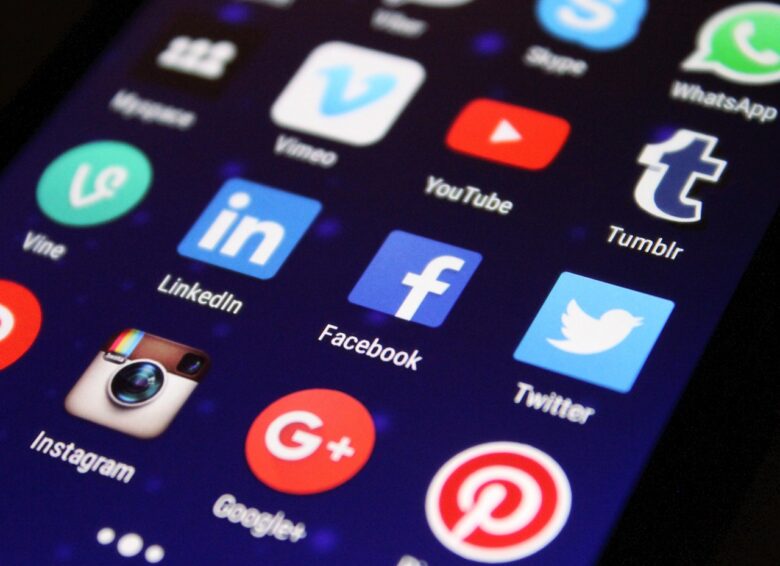
The picture is expressing sponsorship opportunities for small businesses by way of media. There is a hand holding a phone displaying social media apps like Facebook and twitter.

Sponsorship Marketing

As mentioned above, someone can use sponsorship opportunities for small businesses at an event or program to help enhance a small business’s reputation. Let’s look at how at an event or program, the sponsors market their products and the small businesses.  

At an event such as trade shows, virtual, local food festivals, or charity walks, the sponsor can gain recognition by handing out pens, mugs, or other material items with the business logo.

With a sports event, sponsoring a local team or venue, as in the stadium, promotes the business’s logos on their jerseys and is a supportive gesture to the players. The bigger the crowd, the more fun and lively a game can be.

One way to gain a wider audience is by sponsoring TV, radio, podcasts, and youtube channels. This outlet can open the business to a new demographic needing the business products or services. Participating in a documentary project can create more opportunities, leading the small business to gain respect and recognition.

Conclusion

In the end, a sponsorship is beneficial to a business. Learning about sponsorship opportunities puts a small business one step ahead of other companies. 
For more about business, visit Ferrygodmother.biz.

woman with arms stretched out while wearing a virtual reality headset

Virtual Reality: Unlocking Infinite Possibilities

Virtual reality technology is on its way to unlocking infinite possibilities across industries. The immersive experience titillates cognitive abilities, enhancing the experience of an ordinary office meeting into a relaxed oasis.

Read below to unlock the infinite possibilities of VR.

The Three Components of VR

Virtual reality (VR) is a computer-generated environment with exhilarating real-world or imagined scenarios. There are three components to VR, virtual environment, immersive hardware, and interactive software. 

A virtual environment can replicate auditory, visual, and occasionally haptic (touch) sensations. Immersive hardware uses head-mounted displays (HMDs), a screen, and motion-tracking sensors. HMDs allow users to stereoscopically view a virtual world where haptic gloves or motion controllers interact with virtual objects.

Last but not least, interactive software is the last component of a successful virtual reality experience. The software has realistic physics, spatial audio, and interactive elements to help the immersion experience of the user.

Applications of Virtual Reality

Virtual reality is usually known for the gaming experience, but VR has diverse applications across several industries. VR in marketing, retail, and tourism provides potential real-estate buyers with a look at properties or virtual showrooms to demonstrate products.

In healthcare and therapy, VR can provide interactive exercises with real-time feedback or pain distraction during phobia treatment and medical procedures. There are also applications for architecture, design, and engineering. All three can test design iterations, improve communication among project teams and detect potential issues before physical construction.

Another critical application is training and simulation. VR offers a safe and cost-effective way to train employees in high-risk scenarios. Occupations such as the military or hazardous industries use VR to enhance skills, decision-making abilities, and muscle memory.

A man pushing another man in a wheelchair with a virtual reality headset on. Man in wheelchair holding a paddle.

VR’s Potential Benefits for Businesses

Businesses can benefit from VR in four ways: enhanced user engagement, cost savings, competitive advantage, and remote collaboration. VR can lead to heightened brand loyalty, customer satisfaction, and improved learning outcomes in training programs

Remote collaboration facilitates better communication, project coordination, and idea sharing. Creating a memorable impression through VR can drive customer acquisition and retention. VR can reduce costs and accelerate the design iteration and decision-making process with minimal errors. For training purposes, VR minimizes using expensive equipment and risky environments.

Conclusion

As expressed above, virtual reality can beneficially encompass many industries. Businesses can leverage VR’s potential to gain a competitive edge and transform aspects of their operations. As VR technology evolves, it will revolutionize how people work, learn, play, and experience the world.

For more about VR and business, visit Ferrygodmother.biz.

Image of some different social media platforms.

The Impact of Social Media on Business Growth in the Technological Age

Social media plays a big role in business growth. Social platforms help promote one’s business or goods to potential customers to encourage them to make a purchase. It allows one to show off their merchandise and gain the trust of their customers.

Keep reading to learn other ways social media can be used for business growth.

Brand Building and Promotions

Brand building and promotion are critical marketing methods used by businesses and organizations to increase brand recognition, promote a positive perception of the brand, and interact with their target audience. To do this, one must find the right social media to build their brand so people can “discover” them. 

Some ways to promote one’s brand are to share appealing material that reflects one’s beliefs, engages the target audience, and helps develop brand recognition. Emily Pribanic, a University of North Texas graduate, says, ”The rise of social media has led to the rise of influencers. When building their brand, companies should connect with these influencers.” Influencers have grown in popularity due to the development of social media.

Companies should interact with social media influencers when developing their brand. Influencers can do a lot for a company because then people will start to share about their business, such as giveaways, product reviews, and sponsored events. They will also want to buy from one’s business.

Social Listenings

Social listening is analyzing internet discussions about one’s brand and industry in general to learn more about the audience one is targeting. Learn about client views, industry trends, and market wants. Utilize this information to improve one’s strategy, find opportunities, and make data-driven business choices.

With social listening companies’ choices are based on what their target audience wants. This is done through data.

Forbes, states, “Social listening is an integral part of that data. It allows brands to tap into the world’s largest focus group: people from every corner of the globe who share content about their product likes and dislikes, as well as glimpses of what moves and motivates them.”. Get to know what one’s customers want and like.

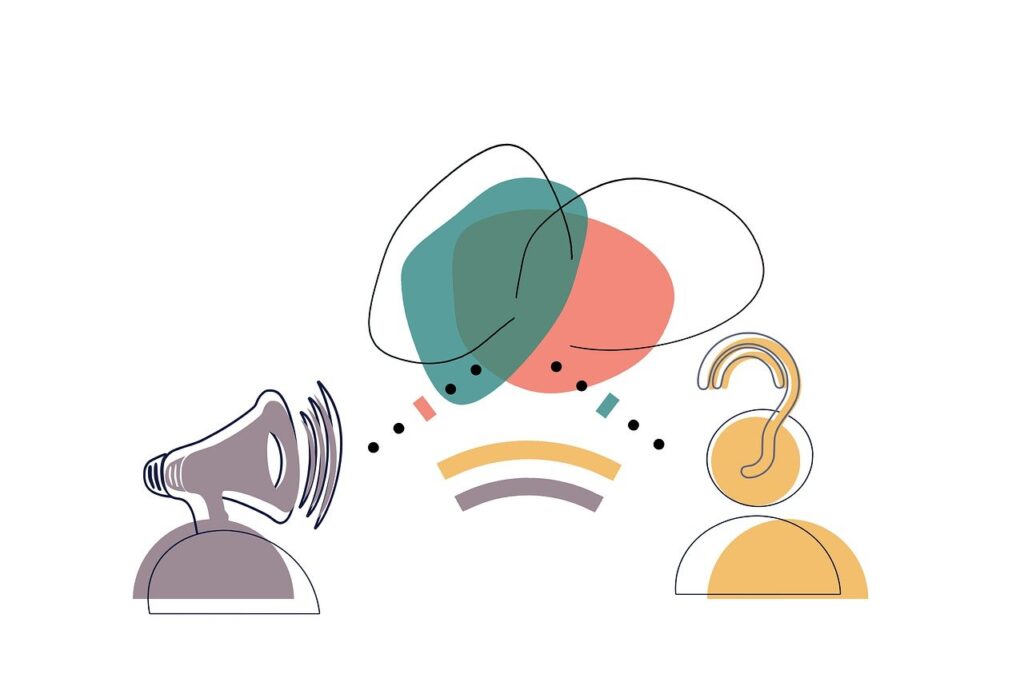
A person listening to what the other wants.

Business Growth With Social Media

Social media every year is becoming something that grows, so more people rely on it. This is now like the TikTok shop (which allows shops, brands, and artists to directly display and sell things on TikTok via videos, LIVEs, and the product showcase page)  since a lot of small businesses are benefiting from it. One gets an increase in customers and demand. It spreads the word around to other people.

Social media can affect how well and a business’s growth in general. One has to build that connection with one’s customers to get more. One has to be open to their customers ‘ thoughts on how one can improve. As well as appeal to a company on one’s social media platform.


 To learn more about building a business, visit our site.